Choosing the right label material is one of the most important decisions you’ll make when ordering custom labels. The two broadest categories — paper and film (also called BOPP, or biaxially oriented polypropylene) — each have strengths that make them ideal for different products, environments, and budgets.
Paper Labels: Classic, Cost-Effective, and Versatile
Paper labels are the most widely used label material in the world. They’re affordable, easy to print on, and available in a variety of finishes — from bright white semi-gloss to uncoated matte and textured stocks like linen or brown kraft.
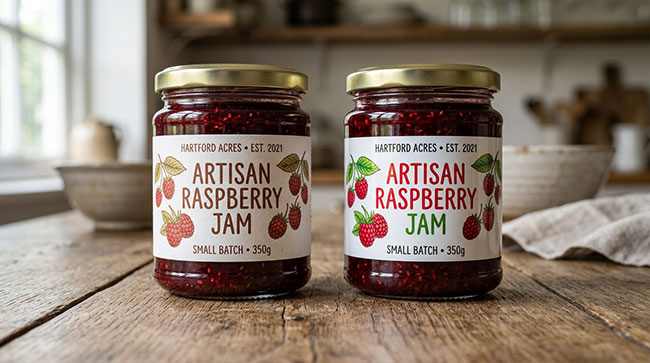
Paper works best for products stored indoors, in dry conditions, and where cost-efficiency matters. Think pantry items, retail boxes, jars of spices, or baked goods. If your product won’t encounter moisture, extreme temperatures, or heavy handling, paper is often the right call.
Best for: Dry goods, boxes, jars, artisan products, and any product sold in a controlled indoor environment.
Film / BOPP Labels: Durable, Moisture-Resistant, and Premium
Film labels — most commonly made from BOPP — are synthetic, which makes them inherently resistant to water, oils, humidity, and tearing. They’re the go-to material for products that will be refrigerated, frozen, used in bathrooms or kitchens, or shipped in conditions where moisture is a concern.
Film is available in white, clear, and metallic finishes. Clear film is especially popular for the “no-label” look, where the label disappears against the container and only your design is visible. Metallic film adds a premium, eye-catching shimmer without the expense of foil stamping.
Best for: Beverages, bath and beauty products, frozen foods, cleaning products, candles, and anything exposed to moisture or physical wear.
Key Differences at a Glance
Durability: Film wins. It resists water, oil, tearing, and scuffing far better than paper.
Cost: Paper is typically less expensive, especially for large runs and simple designs.
Appearance: Paper has a natural, tactile feel that works well for organic and artisan brands. Film delivers a sleek, polished look and enables the “no-label” clear option.
Print quality: Both materials produce excellent print results with digital and flexo printing. Film handles vibrant, high-saturation colors particularly well.
How to Decide
Ask yourself three questions: Where will the product be stored or used? Will it encounter moisture or temperature extremes? And what aesthetic fits your brand? If you’re still unsure, request samples of both materials applied to your container — seeing and touching the label in real life makes the decision much easier.
At LabelSwift, we offer a full range of paper and film/BOPP label materials. Need help choosing? Contact our team or use our instant pricing tool to compare options.
