
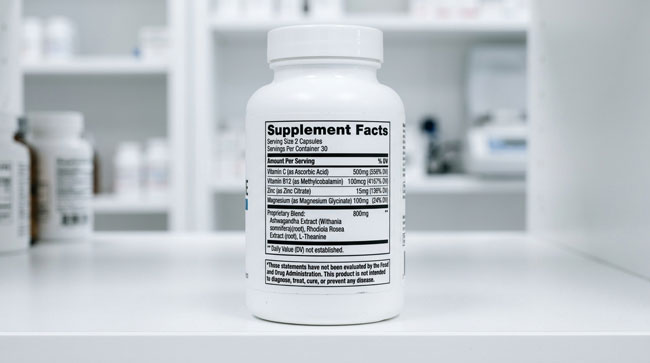
Dietary supplements — vitamins, protein powders, herbal capsules, and similar products — follow their own set of FDA labeling rules, distinct from food labeling. The most visible difference is the Supplement Facts panel, which replaces the Nutrition Facts panel used on food products.
Required Label Elements
Statement of identity: Must identify the product as a “dietary supplement.” Supplement Facts panel: Lists serving size, each dietary ingredient, amount per serving, and the percent daily value where established. Ingredient list: Non-dietary ingredients (fillers, binders, capsule materials) listed separately. Net quantity, manufacturer name and address, and directions for use are also required.
Claims: What You Can and Can’t Say
Supplements may make “structure/function” claims (e.g., “supports immune health”) but may NOT make disease claims (e.g., “prevents the flu”). Any structure/function claim must include the disclaimer: “This statement has not been evaluated by the Food and Drug Administration. This product is not intended to diagnose, treat, cure, or prevent any disease.” Health claims and nutrient content claims have their own specific rules and restrictions.
Common Mistakes
Using the wrong panel format (Nutrition Facts instead of Supplement Facts), making unauthorized health claims, omitting the required disclaimer, and listing ingredients incorrectly are the most common compliance issues. These mistakes can trigger FDA warning letters and forced market withdrawals.
Planning supplement labels? Browse our supplement labels and vitamin labels, or contact us for sizing help.
