
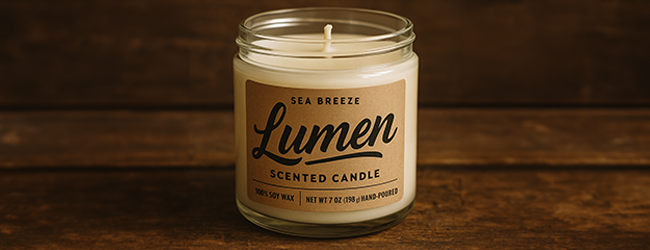
Below is a complete breakdown of what’s required and what’s recommended.
Core Legal Requirements for Candle Labels
Before choosing fonts, finishes, or materials, every candle maker must include three essential pieces of information. These requirements help standardize packaging and protect consumers — and missing them can cause issues at retail or during inspections.
1. Product Identity
Your label must make it clear what the product is. For candles, the simplest option is best:
-
“Candle”
-
You may add specifics like “Soy Candle,” “Beeswax Candle,” or “Tealight,” as long as it remains easy to understand.
Tips for product naming:
-
Use familiar, straightforward wording.
-
Avoid vague or overly creative terms that may confuse buyers.
-
Place the product name in a clear, immediately visible location.
2. Net Weight (Net Contents)
You must list the weight of the candle alone — excluding the jar, tin, or other container. This is typically displayed in:
-
Ounces (oz)
-
Grams (g)
Listing both is best practice and helps meet U.S. and international expectations.
3. Manufacturer or Distributor Information
Your label must include:
-
Business name
-
City, state, and ZIP code
-
Full street address if not listed in a public directory
If your candles are made by a third-party manufacturer, use approved wording such as:
-
“Manufactured for:”
-
“Distributed by:”
Safety & Usage Recommendations
While not all safety statements are legally required for every candle, they are strongly recommended and widely expected within the industry. These protect both your customers and your brand.
Fire Safety Warnings
Fire safety statements help ensure responsible use. Common warnings include:
-
Burn within sight
-
Keep away from children and pets
-
Keep away from flammable objects
Many candle makers also use the ASTM F2058 fire safety icons — a recognized set of safety symbols for candles.
Ingredients or Fragrance Disclosure
This is optional but beneficial:
-
Listing wax type (e.g., soy, coconut, beeswax) builds trust.
-
Fragrance details help customers with sensitivities or allergies.
-
Transparency strengthens your brand.
Basic Burning Instructions
Clear usage instructions improve customer experience and reduce safety risks, such as:
-
Trim wick to ¼ inch before lighting
-
Do not burn for more than X hours
-
Allow full melt pool on the first burn
Short, simple guidance increases both satisfaction and safety.
Design & Formatting Considerations
A candle label has to do more than meet legal rules — it must also fit correctly, stay readable, and complement your packaging.
Choosing the Right Label Size
Measure the flat area of your container and test using a paper mockup. This ensures your label:
-
Fits the curved surface
-
Lays flat without wrinkling
-
Avoids peeling or lifting
Design Best Practices
Focus on legibility above all:
-
Use easy-to-read fonts
-
Maintain strong color contrast
-
Leave enough white space for clarity
Decorative designs are great, but your required information must remain clear.
Transparent Candle Labels
Transparent labels can create a sleek, modern look — especially on glass containers. Just be sure to:
-
Test contrast against your actual vessel
-
Ensure text remains readable once applied
Adding Marketing Value
Once you’ve met compliance requirements, your label becomes a powerful branding tool. Consider adding:
-
Scent notes described in simple, appealing language
-
Matching finishes (matte, gloss, metallic) across your candle line
-
Consistent branding for instant recognition
-
Batch codes or QR codes for traceability and additional info
These enhancements elevate your product and help communicate quality.
Common Candle Label Mistakes
Avoid these frequent pitfalls:
-
Using labels that are too small to fit required info
-
Hiding warnings in hard-to-read areas
-
Listing weight including the jar or tin
-
Choosing fonts or colors with poor readability
A quick review against CPSC guidelines can prevent costly errors.
State & International Differences
If you sell beyond the U.S., requirements may change:
-
EU/UK markets: CLP regulations require hazard symbols and detailed fragrance disclosures for scented candles.
-
Certain U.S. states: Ingredient, environmental, or claim-based rules may apply.
Always verify rules before expanding into new regions.
Tips for staying compliant:
-
Check local regulations before launching in new markets
-
Keep label templates flexible for quick updates
-
Use official sources such as CLP Regulations or state consumer protection sites
Create Professional, Compliant Candle Labels
When you’re ready to bring your candle line to life, LabelSwift offers durable, high-quality label materials that hold up to heat, oils, and handling — all while showcasing your brand beautifully.
Quick Recap
-
Required: Product identity, net weight (without container), manufacturer/distributor info
-
Recommended: Fire safety warnings, burn instructions, ingredient or fragrance details
-
Net weight must exclude the jar or tin
-
Measure containers before choosing label size
-
Prioritize legibility in your design
-
Check regulations if selling internationally
