
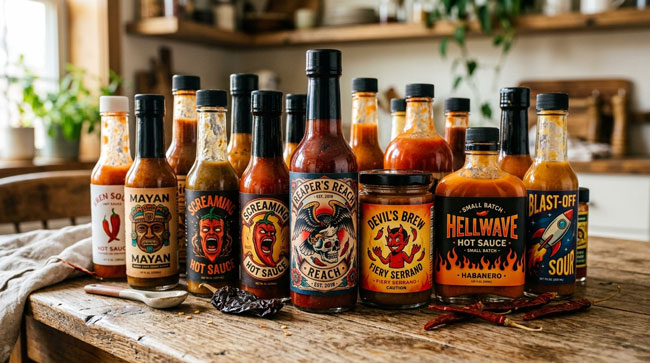
Hot sauce is one of the few product categories where wild, irreverent, even outrageous label design is not just accepted — it’s expected. The hot sauce aisle is a gallery of personality, humor, and bold graphics, and small brands regularly compete with (and outsell) major brands purely on the strength of their label.
Why Hot Sauce Labels Are Different
Hot sauce buyers are enthusiasts. They collect. They gift. They display. A great hot sauce label is part of the product experience — it communicates the sauce’s personality, heat level, and flavor philosophy before anyone tastes a drop. The label IS the marketing.
Design Strategies That Work
Humor and personality: Puns, irreverent names, and playful warning labels create shareability. Customers photograph labels and share them on social media. Bold illustration: Custom artwork — from vintage woodcuts to modern digital art — gives each sauce a collectible quality. Color and contrast: Bright colors and high contrast grab attention in a crowded aisle. Series design: Creating a consistent design system across multiple heat levels or flavors builds brand recognition while letting each product have its own identity.
Material Choices
Hot sauce bottles live on kitchen counters and in refrigerators. They get handled with greasy, sauce-covered hands. BOPP film with lamination is the standard — it survives oil, moisture, and repeated handling. Matte laminate is increasingly popular for premium and artisan sauces, while gloss gives a bright, energetic feel.
FDA Requirements
Hot sauce is a food product, so all FDA food labeling requirements apply: ingredient list, nutrition facts, allergen declarations, net contents, and manufacturer information. Make sure your bold design leaves room for the required compliance information.
Ready to label your sauce? Browse our hot sauce labels and build yours now.
