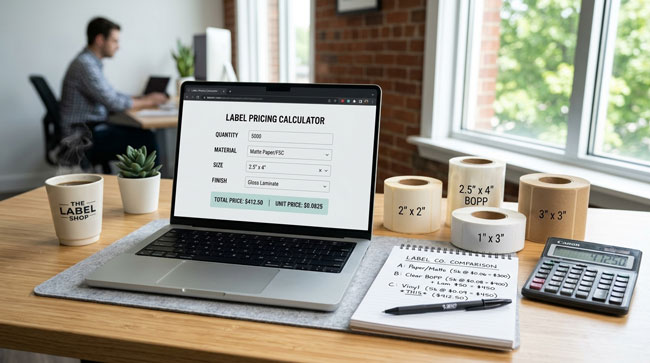
“How much do custom labels cost?” is the most common question we hear — and the honest answer is: it depends. Label pricing is driven by a handful of variables, and understanding them helps you make smart decisions about where to invest and where to save.
The Variables That Drive Cost
Quantity: The single biggest factor. Label printing has a fixed setup cost that gets spread across every label. A run of 500 labels will have a higher per-label cost than a run of 5,000. Volume discounts are significant in this industry.
Size: Larger labels use more material and more ink, so they cost more per unit than smaller labels.
Material: Paper is generally the least expensive. White BOPP film costs slightly more. Clear BOPP and metallic film cost a bit more still. Foil paper and specialty materials are at the premium end.
Finish: No finish (uncoated) is the cheapest. UV coating adds a small amount. Laminate adds more, with matte and gloss laminate priced similarly.
Shape: Standard shapes (rectangle, circle, oval, square) use stock dies — no extra cost. Custom die-cut shapes involve a one-time die charge, typically $50-$250.
Color: Full-color CMYK printing is standard and included in the base price. Adding white ink (for clear or metallic labels) adds a small premium. Spot colors (Pantone) may also cost more.
How to Get the Best Value
Order the quantity you’ll actually use within a reasonable timeframe — overordering wastes money, but underordering drives up your per-label cost. Choose your material and finish based on what your product actually needs, not the most premium option available. And use an online pricing tool to compare options instantly instead of waiting for manual quotes.
At LabelSwift, our online pricing tool shows you costs instantly as you adjust size, material, finish, and quantity — no waiting, no hidden fees.
