
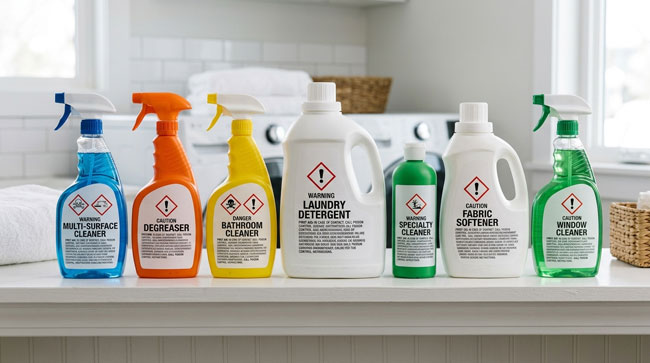
Cleaning products sit at the intersection of multiple regulatory frameworks. Depending on the product’s ingredients and intended use, your labels may need to comply with EPA, CPSC (Consumer Product Safety Commission), and GHS (Globally Harmonized System) requirements — in addition to being durable enough to survive the conditions under which cleaning products are used.
EPA Requirements
If your cleaning product makes antimicrobial claims (kills germs, sanitizes, disinfects), it’s regulated as a pesticide by the EPA. The label must be registered with the EPA and must include specific signal words, hazard statements, precautionary statements, first aid instructions, and an EPA registration number. This is a formal regulatory process that must be completed before the product can be sold.
CPSC and FHSA Requirements
Household chemical products that are hazardous (toxic, corrosive, irritant, or flammable) fall under the Federal Hazardous Substances Act (FHSA), enforced by the CPSC. Required label elements include the product name, signal word (DANGER, WARNING, or CAUTION), a statement of the hazard, precautionary measures, first aid instructions, and storage and disposal information.
GHS Compliance
For products sold in workplace settings or internationally, GHS labeling provides a standardized framework for communicating chemical hazards. GHS labels use specific pictograms (diamond-shaped warning symbols), signal words, and standardized hazard and precautionary statements.
Material Durability
Cleaning product labels encounter splashes of the product itself, moisture, oils, and physical abrasion. BOPP film with chemical-resistant lamination is essential. Paper labels will not survive in this environment. The label must remain legible for the life of the product — this is a regulatory requirement, not just an aesthetic preference.
See our cleaning product labels and chemical-resistant options.
