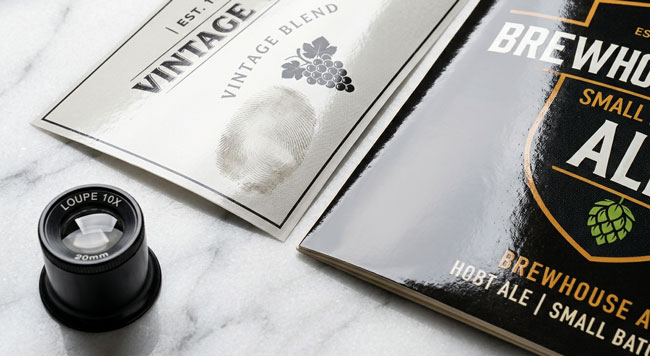
Both gloss UV coating and gloss laminate make your labels shiny. Both protect the printed surface. But they’re applied differently, perform differently, and cost differently. Understanding the distinction helps you choose the right finish without overspending — or underprotecting.
Gloss UV Coating
UV coating is a liquid finish applied to the label surface and cured (hardened) instantly with ultraviolet light. It creates a smooth, glossy surface that resists fingerprints and light scuffing. UV coating is thinner than laminate, which keeps the label profile low and the cost down.
Pros: Cost-effective, fast to apply, good scuff resistance, keeps label thin and flexible.
Cons: Less durable than laminate under heavy handling, moisture, or abrasion. Can crack if the label is applied around tight curves.
Gloss Laminate
Laminate is a thin plastic film bonded to the label surface. Because it’s a physical layer rather than a liquid coating, it provides superior protection against scratching, moisture, tearing, and chemical exposure. Laminate adds a slightly thicker feel to the label, which many brands perceive as more premium.
Pros: Maximum durability, excellent moisture and chemical resistance, premium tactile feel.
Cons: Slightly higher cost than UV coating. Adds minimal thickness to the label.
Which Should You Choose?
If your product lives in a controlled, dry environment and won’t be handled heavily — like a retail box, a jar on a pantry shelf, or a bag of coffee — gloss UV is a smart, budget-friendly choice. If your product will encounter moisture, oils, frequent handling, or outdoor conditions — like a beverage bottle, a cleaning product, or a candle — gloss laminate is worth the investment.
Compare both options side by side at LabelSwift: Gloss UV Labels | Gloss Laminate Labels. Our pricing tool lets you switch between finishes and see the cost difference instantly.
